

Summary
Sales training in Singapore is most effective when it focuses on mindset, behaviour, and real customer conversations rather than memorised scripts. A skilled sales trainer in Singapore helps teams build confidence, improve communication, and apply practical frameworks that translate directly into better sales performance.
Why Sales Training in Singapore Needs a New Approach
Over the years, I have worked with sales teams across industries and regions. One pattern shows up again and again.
Salespeople are often trained on what to say, but not how to think.
Traditional sales training focuses heavily on techniques. Scripts. Objection handling. Closing lines. While these have value, they rarely change behaviour long term. Once the pressure is gone, people revert to old habits.
In a competitive and sophisticated market like Singapore, customers are informed, discerning, and relationship-driven. This is why sales training in Singapore must go deeper. It must address mindset, trust, and communication, not just tactics.
A strong sales trainer in Singapore understands this shift and designs training that reflects how buyers actually make decisions today.
What a Modern Sales Trainer in Singapore Does Differently
1. Focuses on behaviour, not just knowledge
Knowledge alone does not sell. Behaviour does.
Effective sales training in Singapore helps salespeople change how they listen, how they ask questions, and how they respond under pressure.
2. Builds confidence before technique
Many salespeople struggle not because they lack skill, but because they lack belief.
A good sales trainer in Singapore works on self-confidence, emotional control, and clarity before introducing advanced sales techniques.
3. Trains for real conversations
Modern buyers want conversations, not pitches.
Sales training must simulate real customer situations, not ideal scenarios.
4. Aligns sales with brand and values
In Singapore, trust matters.
Sales training works best when it aligns with the company’s brand promise and values rather than aggressive short-term selling.
A Real Sales Training Case Story
A regional B2B company in Singapore approached me because their sales numbers had plateaued. Their team was experienced, trained, and hardworking, yet conversion rates were dropping.
Instead of retraining them on product knowledge, the sales training focused on three things:
How they opened conversations
How they listened to customer intent
How they positioned value instead of price
During one session, a salesperson realised that he was speaking for nearly seventy percent of the conversation. Once he adjusted his approach, his closing rate improved within weeks.
This is the power of behaviour-focused sales training in Singapore.
Small shifts create meaningful results.
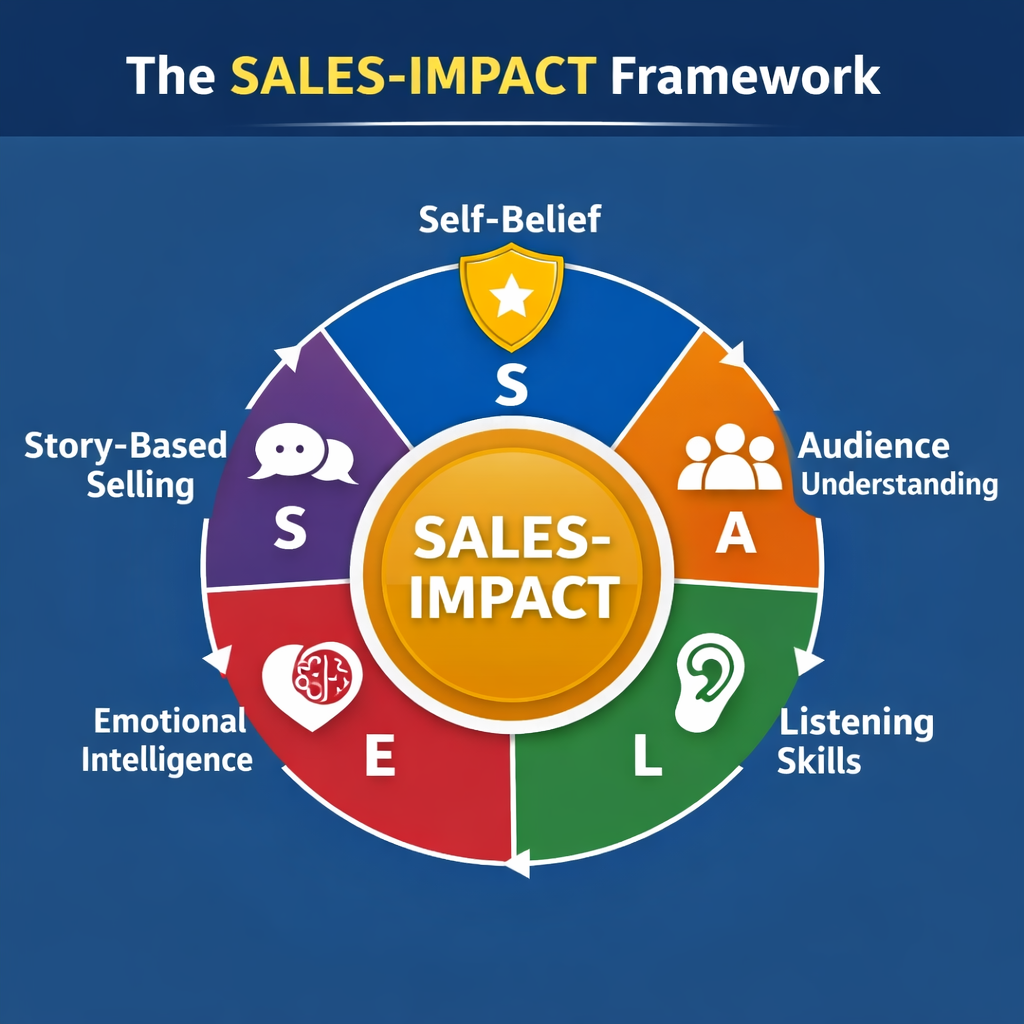
The SALES-IMPACT Framework for Sales Training
Over time, I developed a simple framework that works exceptionally well for sales training in Singapore. It keeps learning practical and repeatable.
S. Self-belief
Salespeople must believe in their value before customers do.
A. Audience understanding
Understanding customer motivation is more important than pushing features.
L. Listening skills
Great sales conversations are built on listening, not talking.
E. Emotional intelligence
Sales situations often involve uncertainty and rejection. Emotional control is essential.
S. Story-based selling
Stories create connection and trust faster than data alone.
Why Sales Training in Singapore Must Be Practical
Salespeople do not need more theory.
They need tools they can use the very next day.
The most effective sales trainer in Singapore designs sessions that include:
Live role-plays
Real customer objections
Peer feedback
Clear action steps
This ensures sales training does not stay in the room. It moves into daily behaviour.
Common Mistakes in Sales Training
Treating sales training as a one-time event
Focusing only on closing techniques
Ignoring emotional confidence
Training without follow-up or reinforcement
Copying overseas sales models without local relevance
Sales training in Singapore works best when it is continuous, contextual, and human.
Sales Training Implementation Checklist
Is the training aligned with your customer journey
Does it focus on mindset and behaviour
Are sales conversations practiced, not just explained
Is there follow-up after training
Does it support long-term performance, not short-term pressure
What does a sales trainer in Singapore typically cover
A sales trainer in Singapore focuses on communication skills, confidence, customer engagement, and practical selling frameworks.
How long does sales training take to show results
Most teams see behavioural improvements within weeks when training focuses on real conversations.
Is sales training useful for experienced teams
Yes. Experienced salespeople often benefit the most because small refinements create big performance gains.
Does sales training work across industries
Yes, when the training is customised to customer behaviour and brand positioning.
Why is local context important in sales training in Singapore
Customer expectations, communication style, and trust factors vary by market. Local relevance improves effectiveness.
Conclusion
Sales today is no longer about pressure or persuasion. It is about connection, clarity, and confidence.
Effective sales training in Singapore helps teams think differently, communicate better, and build trust naturally.
A skilled sales trainer in Singapore does not just teach people how to sell.
They help people believe, listen, and connect.
And that is what drives sustainable sales performance.

.webp)
 (1).jpg)